Are you trying to figure out whether a company sells physical goods or invisible expertise, or are you trying to decide what kind of business to start yourself? When you are exploring how companies operate or trying to understand the market, telling the difference between buying a tangible item and paying for human labor or specialized skill can sometimes get confusing.
Here is the quick answer: A product-based business creates and sells tangible or digital items that customers physically or digitally own (like smartphones, clothing, or software downloads). A service-based business sells intangible expertise, time, labor, or specialized skills (like legal advice, plumbing, or consulting) without transferring ownership of a physical good.

Why This Matters
Whether you are launching your first side hustle, managing a career pivot, or simply trying to understand how the businesses you support every day make money, understanding the structural difference between products and services is fundamental. Every company’s cash flow, inventory management, labor costs, and scalability depend entirely on which of these two core models it chooses. If you understand how they operate, you can easily evaluate business opportunities, overhead risks, and long-term growth potential.
Product-Based vs. Service-Based Business Models Explained
1. Product-Based Business Model
- What? A model where a company manufactures, sources, or digitalizes goods and sells them directly to consumers or other businesses for ownership.
- How? The business invests upfront capital into manufacturing inventory, warehousing goods, and shipping items to customers. Revenue is generated per unit sold.
- Real-World Example: Apple designs and sells physical hardware like iPhones, Macs, and accessories that customers own outright.
2. Service-Based Business Model
- What? A model where a business or individual sells time, knowledge, physical labor, or specialized capabilities instead of a physical item.
- How? Revenue is generated based on billable hours, project milestones, retainers, or subscription access to expert assistance. The customer pays for an outcome or labor, not a physical object.
- Real-World Example: Deloitte provides professional tax, audit, and consulting services using the expertise of its human workforce.
Core Differences at a Glance
| Feature | Product-Based Model | Service-Based Model |
| Tangibility | Physical or downloadable digital goods | Intangible time, skill, or expertise |
| Inventory | Requires warehousing and stock management | No physical inventory; relies on talent/time |
| Scalability | High scalability (sell one digital item or mass-produce goods infinitely) | Harder to scale (restricted by human hours and labor limits) |
| Upfront Cost | High initial capital for manufacturing and supply chains | Low initial capital (starts with skills and a laptop/tools) |
Real-World Example
Imagine you want to start a weekend business to generate some extra income.
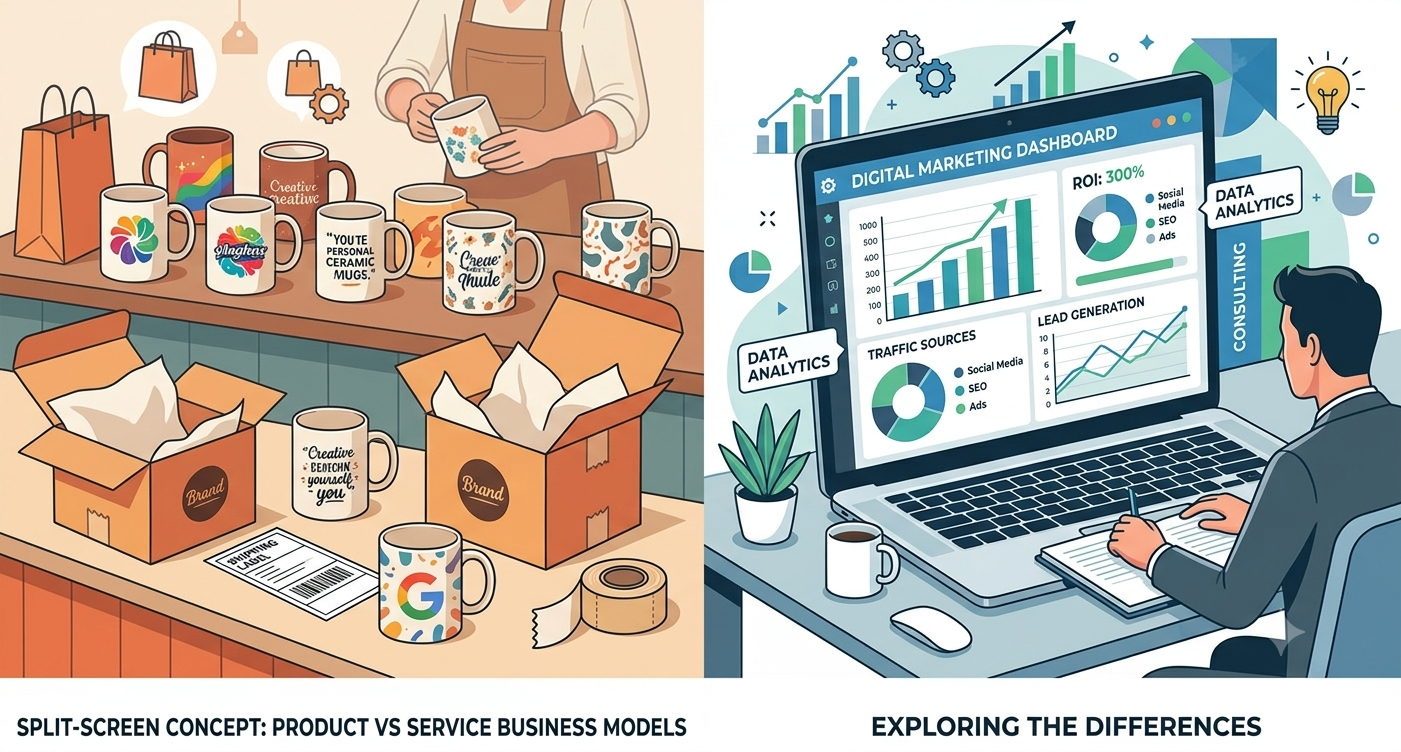
- The Product-Based Route: You design and print custom camping mugs, order 50 units in bulk from a manufacturer, and sell them online for a profit. You have to manage box sizes, shipping labels, and storage space in your garage.
- The Service-Based Route: Instead of selling mugs, you offer freelance digital marketing and social media management services to local cafes, charging a monthly retainer for your creative work. You don’t hold any inventory or ship any packages.
Common Mistakes to Avoid
- Assuming services can’t scale: While services traditionally rely on human hours, modern companies scale services using technology (e.g., automated booking platforms or standardized digital marketing agencies).
- Forgetting inventory risks: Product-based businesses face the danger of unsold stock tying up cash flow, while service businesses face the danger of burnout and unbillable downtime.
- Viewing them as completely separate: Many modern businesses blend both. For example, a software company (product) might also sell custom implementation consulting services.
FinEdvia Action Plan
- Audit your daily spending: Look at the last three purchases you made and categorize them strictly into product-based or service-based.
- Analyze a hybrid company: Research how a tech giant like Microsoft sells both products (Windows operating system) and services (cloud support and consulting).
- Evaluate a local business: Pick a shop in your neighborhood and map out whether its primary revenue driver relies on inventory or human labor.
- Test a concept: Think of a business idea you like and write down how you would turn it into a service-first model versus a product-first model.
Frequently Asked Questions
Which business model is more profitable?
Profitability depends entirely on the industry and execution. Product businesses can enjoy massive profit margins through mass production, while service businesses often have very low overhead costs, leading to high margins on specialized expert work.
Can a service business transition into a product business?
Yes! This is very common in the tech industry. For example, a custom web development agency (service) might build a reusable website builder tool and sell it as a software product (SaaS).
Why is scalability harder in a service-based model?
Because service businesses rely heavily on human labor, doubling your client base usually requires doubling your workforce or working twice as many hours, whereas a digital product can be sold thousands of times with zero extra manufacturing costs.
What are the biggest risks for product-based startups?
High upfront manufacturing costs, supply chain disruptions, storage/warehousing expenses, and the risk of holding unsold inventory that loses market value.
Related FinEdvia Articles
- 10 Common Business Models Explained With Examples
- Understanding Startup Unit Economics and Cash Flow
- How to Choose Between Bootstrapping and Raising Capital
Conclusion
Understanding the split between products and services helps you decode how companies make money, manage risk, and scale over time. Whether you lean toward managing physical goods or leveraging human expertise, recognizing these frameworks will sharpen your business acumen.
Are you more drawn to building a product-based brand or a service-based venture for your next project?
Leave a Reply